
Many people enter therapy feeling like they’ve never quite fit in. Relationships may feel difficult to navigate, emotions can seem intense or hard to regulate, and everyday responsibilities may take far more energy than they appear to for others. Sometimes these experiences are connected to trauma, but for others, the picture is more layered: Have I always been this way? Did my experiences shape me into this? Or could this be neurodivergence?
In some cases, behaviours that are seen as “trauma responses” may actually be long-standing neurodivergent traits that were misunderstood, criticized, or unsupported growing up. Over time, those experiences themselves can become a source of trauma.
In this first MoonSage Reflections Blog Post, we’ll look at the ways trauma and neurodivergence can overlap, how to make sense of your patterns with compassion rather than self-criticism, and how to begin supporting yourself more gently.
What is Neurodivergence?
To understand neurodivergence, it’s helpful to first understand neurodiversity.
Neurodiversity refers to the idea that human brains and minds naturally vary.
As part of being human, we each experience and engage with the world in different ways, shaped by our identities, beliefs, worldviews, and relationships. These differences are NOT flaws or deficits, but part of what makes us human. In fact, this diversity is one of our greatest strengths, reflecting the richness of how people think, feel, and connect. It is normal, natural, and something to be acknowledged and valued.
Neurodivergence refers to the natural variation in how human brains are wired.
In modern health care systems, some of these differences are described using diagnostic labels or disorders when they reflect consistent patterns that may create challenges in a world built around neurotypical norms and expectations. These labels help describe experiences and support needs, but they don’t capture the full complexity of a person.
It is important to note that there is no single, universally agreed-upon definition of neurodivergence. As a result, not all conditions are consistently included across frameworks, and there remains ongoing discussion within both research and clinical communities regarding how the term should be defined and applied.
Some neurodivergent conditions include, but are not limited to:
ADHD.
Autism.
Obsessive Compulsive Disorder (OCD).
Dyslexia.
Dyspraxia.
Dyscalculia.
Down Syndrome.
Tourette’s Syndrome.
Bipolar Disorder.
What is Trauma?
Trauma is not just about what happened to you, but about how your body, brain, and nervous system responded when faced with something overwhelming or perceived as threatening in order to survive or cope.
Trauma may stem from a single distressing event, such as an accident or assault, or from repeated experiences over time, including emotional neglect, bullying, discrimination, or a lack of consistent support during development.
When an experience exceeds a person’s capacity to cope, the nervous system can shift into survival-based responses.
This may show up as patterns such as:
Hypervigilance (feeling constantly on alert or scanning for threat).
Shutdown or dissociation (feeling numb, detached, or mentally “checked out”).
Intrusive memories or flashbacks.
Avoidance of reminders connected to distressing experiences.
Fawning (Prioritizing safety through people pleasing or appeasing other people).
Over time, these survival responses can shape how a person understands themselves, relates to others, and experiences the world. Trauma can influence memory, emotional regulation, focus, and the sense of safety and trust within relationships.

The Overlap between Trauma and Neurodivergence
The connection between neurodivergence and trauma can be difficult to untangle because many of the experiences overlap. Both impact the nervous system, which can shape how a person processes emotions, responds to stress, experiences the world, and navigates everyday life.
Overlapping traits may look like:
Feeling overwhelmed easily.
Strong emotions that feel hard to control.
Shutting down or going numb.
Procrastination or freezing.
Burnout and exhaustion.
Feeling “on edge” or anxious.
It is very common for neurodivergent people to also carry a lot of trauma. Research shows that neurodivergent people may have a higher chance of experiencing trauma, not only from a single distressing event, but also from repeated experiences like being misunderstood, excluded, or not having environments that fit how their brain works (Jangid et al., 2025).
This happens because neurodivergent people often move through a world that is not designed for their needs. From a young age, they may be misunderstood, corrected, or expected to function in ways that feel unnatural or overwhelming for their nervous system. Over time, this can create repeated experiences of stress, pressure, and emotional disconnection.
The overlap between neurodivergence and trauma is not always about what someone experiences, but why those experiences are happening beneath the surface. One way to understand the difference is:
Neurodivergence relates to the brain’s natural wiring.
Trauma relates to the nervous system’s response to painful or overwhelming experiences.
How to Begin Understanding Your Own Patterns
Reflect on Early Experiences
Sometimes it helps to look at what existed before major stressful or traumatic experiences occurred., such as in childhood.
You might ask yourself:
Were you highly sensitive, emotionally intense, or easily overstimulated as a child?
Did you struggle socially even in safe environments?
Were routines, transitions, focus, or sensory experiences difficult from an early age?
Did adults describe you as “too sensitive,” “daydreamy,” “scattered,” “in your own world” or “always on the go”?
Many Neurodivergent individuals have thoughts throughout their life such as:
“I thought everyone else got a manual on how to be human, but I didn’t.”
“It always felt like I didn’t fit in.”
“It feels like no one understands me.”
“Why is everything always so hard.”
Patterns that existed throughout childhood into adulthood may point toward neurodevelopmental differences rather than trauma alone.
Notice What Activates Your Reactions
Trauma responses are often connected to themes of danger or emotional threat such as conflict, criticism, abandonment, rejection, yelling, or feeling unsafe may trigger strong nervous system reactions.
Neurodivergent distress is often more consistent across situations. Examples may include:
Sensory overwhelm.
Difficulty shifting attention.
Trouble processing vague instructions.
Fatigue after most social interactions.
Distress caused by unpredictability or overstimulation.
Of course, both experiences can exist at the same time. You don’t need to prove to anyone which parts of yourself are neurodivergent and which parts are connected to trauma. You also don’t need to figure out which came first in order for your experiences to be valid.
How to Support Yourself Gently and with Compassion
You don’t need to fully understand whether your struggles come from neurodivergence, trauma, or both before you start supporting yourself.
Start by focusing on nervous system regulation through rest, routines, movement, grounding, and sensory support.
Give yourself permission to use accommodations that make life easier, like planners, breaking tasks into steps, or adjusting your environment.
Try to meet yourself with compassion instead of criticism. Self-compassion is defined as treating yourself with care, kindness, and support during times of pain, struggle, or difficulty, whether those experiences come from personal challenges, mistakes, or outside circumstances (Neff, 2023). Focus on mindfully and compassionately exploring your reactions rather than blaming yourself for them, and allow yourself support with gentleness instead of harshness.
If you seek therapy, look for support that is both trauma-informed and neurodivergent-affirming. Exploring your experiences with curiosity rather than pressure is often more helpful than trying to find a perfect answer. Having a mental health professional you trust and feel safe with can make a big difference throughout this process.
Most importantly, let go of the idea that you need to “fix” yourself. Healing often begins with understanding yourself with more compassion instead of self-blame.
Neurodiversity-Affirming Therapy and Trauma Therapy in Calgary, Alberta
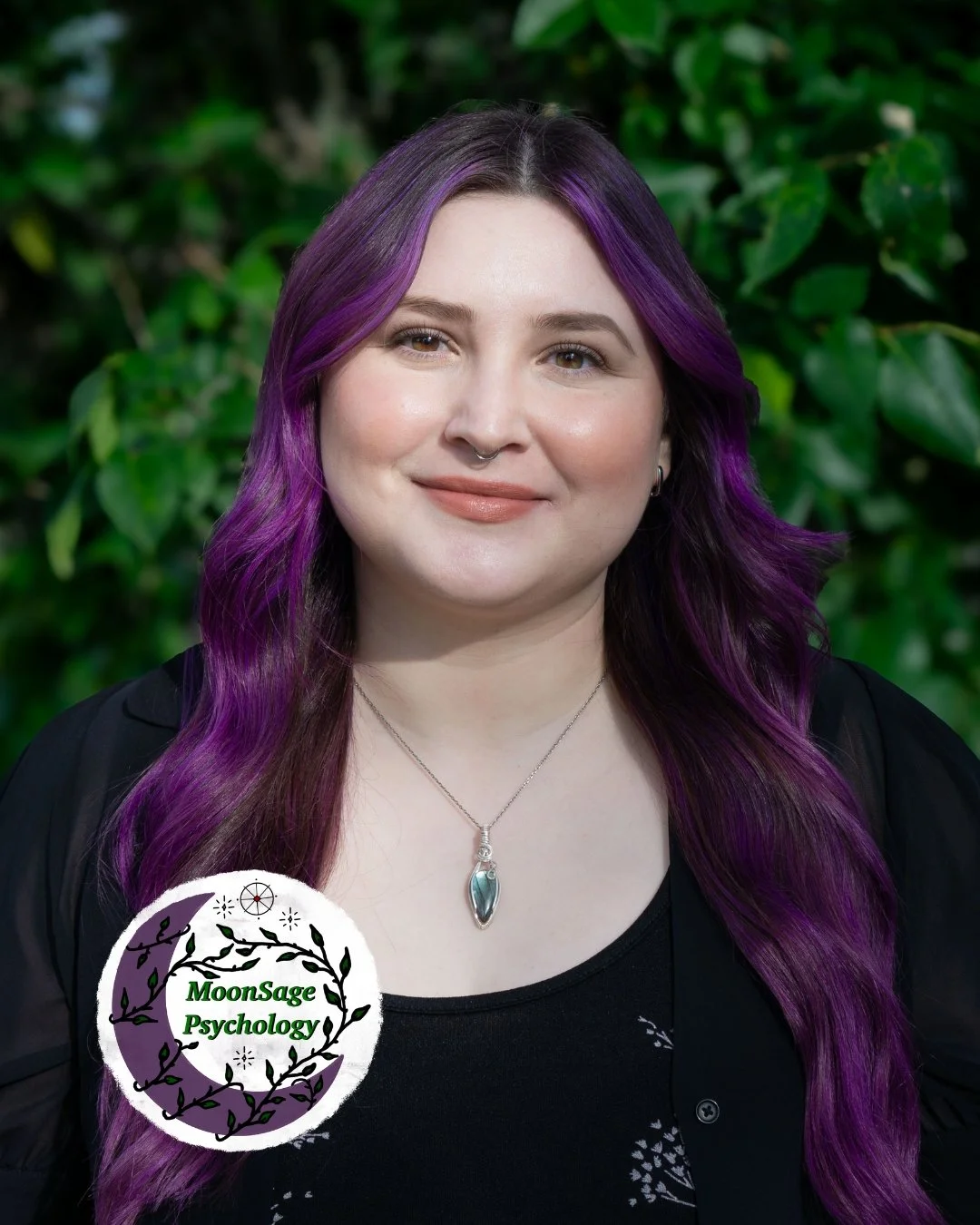
If you are exploring possible neurodivergence, trauma, burnout, chronic stress, or the overlap between them, MoonSage Psychology is here to support you with compassion and attunement.
MoonSage Psychology is founded by Felicia Bibeau, a Mixed White and Anishinaabe Indigenous therapist with lived experience of ADHD. I offer a holistic, trauma-informed, and neurodivergent-affirming approach to therapy, with a focus on creating a space where you can explore your experiences without shame, pressure, or the need to “prove” yourself. Together, we can work toward understanding your nervous system, building self-compassion, and finding supports that feel aligned with who you are.
You are not broken, lazy, or failing. Often, these struggles are signs of a nervous system that has been trying very hard to cope and adapt. With the right support, healing, clarity, self-understanding, and a greater sense of balance are possible.
References
Jangid, R., Seema, N., Arun, G., Barre, V. P., Walia, D., & Rana, S. (2025). Interplay between adverse childhood experiences and neurodevelopmental disorders: A systematic review of recent evidence. Journal of Health Psychology. Advance online publication. https://doi.org/10.1177/0972753125135941
Neff, K. D. (2023). Self-compassion: Theory, method, research, and intervention. Annual Review of Psychology, 74, 193–218. https://doi.org/10.1146/annurev-psych-032420-031047
